
Mold Removal & Remediation in Lubbock, TX
We connect Lubbock-area homeowners with TDLR-licensed mold assessors and remediators for free, no-obligation quotes. Tell us what you’re seeing and we’ll help you get quotes from licensed local pros.
Get a Free Quote Call (727) 300-6656Removing mold starts with stopping the water
Mold remediation is more than wiping a stain. EPA’s mold guide warns: “If you clean up the mold, but don’t fix the water problem, then, most likely, the mold problem will come back.” In Lubbock that water usually comes from somewhere specific: a roof damaged by hail, a plumbing or slab leak, a dripping cooler or AC line, or a room that took on water in a storm. A good remediation plan names the moisture source and leaves the repair to the right trade.
Remediation itself means physically removing mold-damaged material and cleaning what can be saved, inside a controlled work area, so spores and dust are not spread through the rest of the house. For anything beyond a small patch, Texas law sets out who may do that work and how.
The 25 contiguous square foot rule
Texas Occupations Code §1958.102(c) says a person is not required to be licensed to perform mold remediation in an area where the mold contamination affects a total surface area for the project of less than 25 contiguous square feet. Once a hired job reaches 25 contiguous square feet, the company doing it needs a TDLR mold remediation license. Under 16 TAC §78.110, a licensed remediator must also notify TDLR no less than five calendar days before starting a job of that size; in an emergency, §1958.153(b) allows notice by the next business day.
If an unlicensed person starts a small job and discovers the mold reaches 25 contiguous square feet, 16 TAC §78.30(d) says they must immediately stop and tell the owner that the rest of the work must be done by a licensed or registered person. Licensed companies get no small-job pass: the TDLR FAQ says a licensed remediation contractor doing a project under 25 square feet is not exempt from the law and rules, though no notification is needed.
Don’t confuse this with EPA’s 10 square foot figure. EPA’s mold guide says that if the moldy area is less than about 10 square feet, in most cases you can handle the job yourself. That is cleanup advice. The 25 contiguous square feet is a Texas licensing threshold for hired companies. Our post on the 25 square foot rule covers both.
The homeowner exemption
Texas Occupations Code §1958.102(e) says an owner is not required to be licensed to perform mold assessment or mold remediation on a residential property owned by that person with fewer than 10 dwelling units. 16 TAC §78.30(b) says this exemption applies regardless of the total surface area affected. In plain terms, you may clean mold in your own single-family home at any size without a license. The exemption covers the owner, not a company the owner hires: once a hired company’s job reaches 25 contiguous square feet, that company needs a license.
There is a catch for do-it-yourselfers who want paperwork later. The TDLR FAQ says a consultant who has not prepared a mold remediation protocol in advance cannot declare that the project has achieved clearance. If you may need a Certificate of Mold Damage Remediation for a sale or an insurer, bring in a licensed assessor before the work starts.
How a licensed remediation job usually runs
Texas splits larger jobs between two separate licensed companies. Here is the typical order.
Assessment and protocol
An independent licensed mold assessor inspects the home and writes the remediation protocol: what to remove, what to clean and how to contain it.
Containment
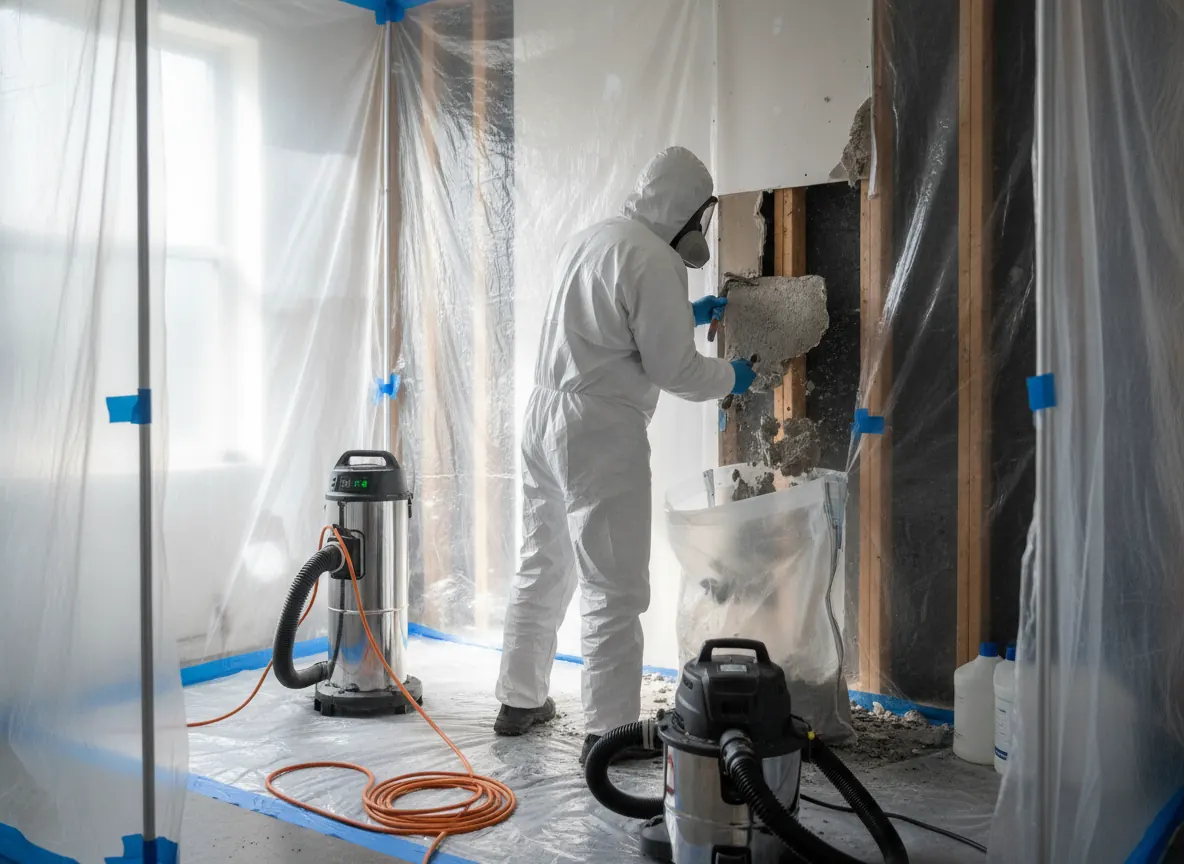
During remediation, crews typically seal the work area with plastic sheeting, cover vents and use negative air pressure with HEPA-filtered air machines so dust stays inside the work zone.
Removal and cleaning
Porous materials with growth, such as drywall, insulation or carpet pad, are usually cut out, bagged and removed. Framing and other hard surfaces are cleaned, often HEPA-vacuumed, and dried.
Clearance
A licensed assessor returns for a post-remediation assessment and, if the work passes, issues a written clearance report.
Certificate (MDR-1)
Within 10 days of finishing, the remediator provides the owner a Certificate of Mold Damage Remediation, TDI form MDR-1.
Texas Occupations Code §1958.155 says a license holder may not perform both mold assessment and mold remediation on the same project, and no one may own an interest in both companies on that project. That is why the assessor and the remediator are always separate firms. Read more on why your inspector can’t be your remover, or see our full process page.
Why the MDR-1 certificate is worth keeping
The certificate includes a statement by the licensed assessor, not the remediator, that the contamination was remediated as outlined in the protocol. Texas Occupations Code §1958.154(b) requires a seller to give buyers copies of certificates issued for the property during the previous five years. The TDLR FAQ notes that a qualifying certificate may be presented to an insurer, which may not make an adverse underwriting decision based on previous mold damage if the requirements are met (Insurance Code §544.303). Ask any company for its TDLR license number and check it on TDLR’s license search.
Note: SB 1255 (2025) changed parts of Texas’s mold law, and TDLR is updating its rules; current rules remain in effect until new ones are adopted. This is general information, not legal advice.
Typical mold removal costs
Typical national ranges from cost guides, 2024–2026 — not quotes.
| Item | Typical range |
|---|---|
| Mold remediation, typical job | $1,200–$3,750 (This Old House avg about $2,300); Fixr range $1,500–$9,000, avg about $3,500 |
| Per square foot of affected area | $10–$30 |
| Bathroom | $500–$1,000 |
| Whole house | $10,000–$30,000 |
Jobs of 25 or more contiguous square feet involve two separate licensed firms, an assessor for the protocol and clearance and a remediator for the work, so budget for both. The real price comes from licensed pros after an on-site assessment. See the full mold remediation cost guide.
Frequently asked questions
Do I need a licensed company to remove mold in Texas?
If you hire a company and the mold affects 25 contiguous square feet or more, Texas Occupations Code §1958.102(c) means that company needs a TDLR mold remediation license. Licensed firms must follow the rules on any size job. Homeowners cleaning their own home are exempt at any size under §1958.102(e). This is general information, not legal advice.
Can I remove mold myself in my Lubbock home?
Texas law lets an owner remediate their own residential property with fewer than 10 units without a license, regardless of size (§1958.102(e); 16 TAC §78.30(b)). EPA’s mold guide says areas under about 10 square feet can usually be handled yourself. For larger areas, or if you’ll need an MDR-1 certificate later, start with a licensed assessor’s protocol.
What is containment during mold remediation?
Containment keeps mold-laden dust inside the work area. During remediation, crews typically seal the area with plastic sheeting, cover vents and doorways, and run HEPA-filtered air machines to keep the space under negative pressure. The remediation protocol written by the licensed assessor sets the containment level the job requires, and clearance checks that the work followed it.
What is a Certificate of Mold Damage Remediation (MDR-1)?
It is a TDI form the licensed remediator must give the property owner within 10 days of finishing, per Texas Occupations Code §1958.154. It includes the licensed assessor’s statement that the mold was remediated as outlined in the protocol. Sellers must give buyers copies of certificates from the previous five years, and it may help with homeowners insurance underwriting.
How much does mold removal cost in Lubbock?
No Lubbock-specific price survey exists. Typical national ranges from cost guides, 2024–2026, run about $1,200–$3,750 for a typical job (This Old House) and $10–$30 per square foot of affected area. Larger Texas jobs also involve a separate licensed assessor, so budget for both. Your real price comes from licensed pros after an on-site assessment.
Found mold or a hidden leak? Get a clear plan.
Free, no-pressure quotes from licensed pros across Lubbock, Wolfforth, Shallowater, Slaton and the South Plains.