
How Mold Remediation Quotes Work in Lubbock
Getting quotes takes a few minutes and costs nothing. Here is what happens when you contact us, and what TDLR-licensed assessors and remediators typically do on a Texas mold job.
Get a Free Quote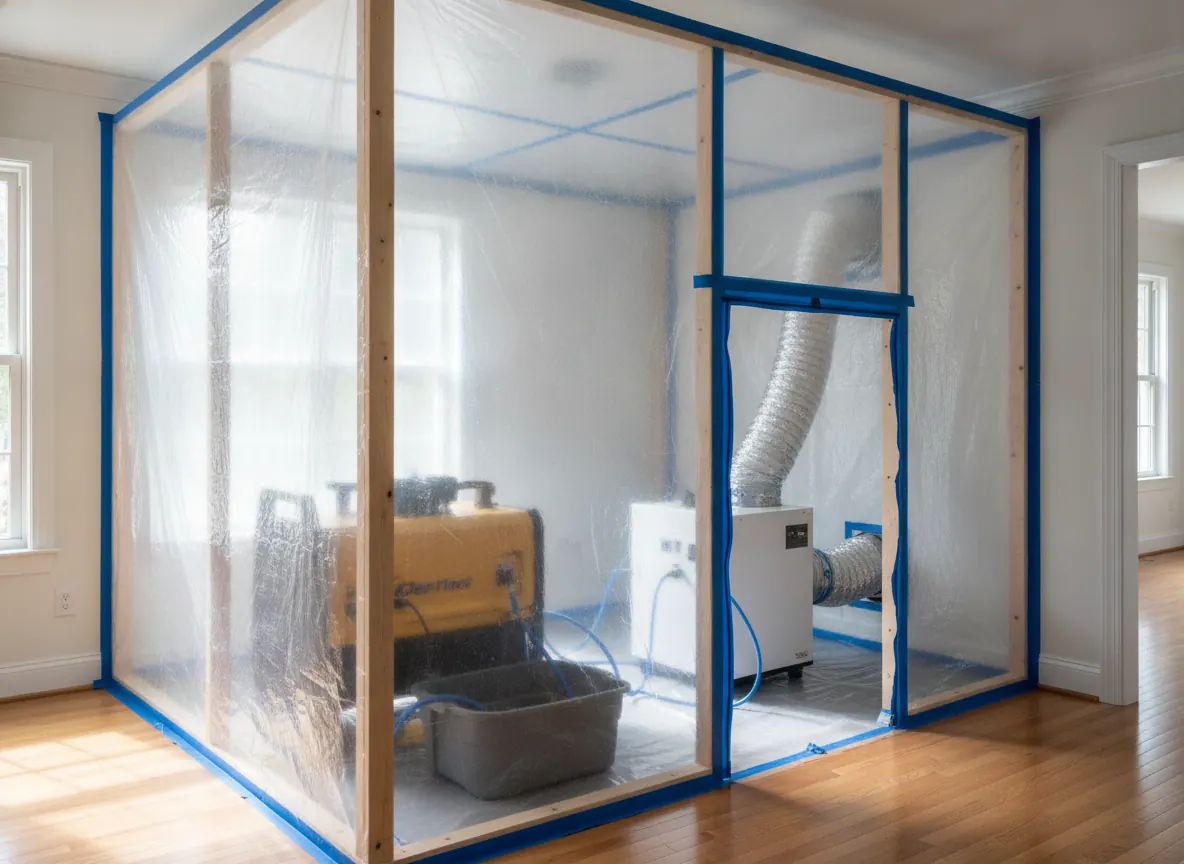
Part 1: How getting quotes works
We are a free quote and referral service. We connect Lubbock-area homeowners with TDLR-licensed mold assessors and remediators for free, no-obligation quotes. Under 16 TAC §78.30(g), reviewing bids and making recommendations is not mold assessment or remediation, and we don't do the work ourselves.
1. Tell us what you're seeing
Use the quote form or call. Share where the mold or water damage is, roughly how big it looks, what caused it if you know (a roof leak after hail, a slab leak, a swamp cooler pan, flooding) and your town.
2. We usually reply the same day
We follow up to confirm the details and explain which kind of licensed pro handles each step of a Texas mold job. We don't evaluate the mold ourselves; that is a licensed assessor's job.
3. Get quotes from licensed local pros
We help you get free, no-obligation quotes from TDLR-licensed mold assessors and, separately, licensed remediators serving Lubbock and the South Plains. Each company prices the job after its own on-site look.
4. Compare and choose, or don't
Review the quotes, ask questions, and check each company's TDLR license number on TDLR's license search. There is no obligation to hire anyone, and the quote service is free.
Part 2: What licensed pros typically do in Texas
Texas Occupations Code chapter 1958 and 16 TAC chapter 78 set out how licensed mold jobs run. Texas Occupations Code §1958.155 says the assessor and the remediator on the same project must be separate, and no one may own an interest in both. A typical licensed job looks like this.
1. Assessment and protocol
A licensed mold assessment consultant looks for moisture and visible growth, decides whether sampling is useful, and writes a remediation protocol describing what must be removed, cleaned and contained. The protocol carries the consultant's license number.
2. Work plan and TDLR notice
A separate licensed remediation contractor writes a work plan based on the protocol. For 25 contiguous square feet or more, 16 TAC §78.110 says the remediator notifies TDLR at least five calendar days before starting. In an emergency, §1958.153(b) allows notice by the next business day.
3. Containment and removal
During remediation, crews typically set up containment, remove moldy porous materials such as drywall and insulation, clean remaining surfaces, and dry the area. The details follow the assessor's protocol.
4. Fixing the water source
EPA's mold guide says that if you clean up mold but don't fix the water problem, the mold will most likely come back. A roofer, plumber or HVAC contractor typically repairs the leak, the slab line or the cooler.
5. Clearance assessment
Under 16 TAC §78.140, a licensed assessment consultant does a post-remediation assessment using visual, procedural and analytical methods. If the area is free of visible mold and the protocol was followed, the consultant issues a written passed clearance report.
6. Certificate and photos
Within 10 days of finishing, the owner receives a Certificate of Mold Damage Remediation (TDI form MDR-1) and before and after photos (§1958.154; 16 TAC §78.150). Keep them for insurance and for any future sale.
This is general information, not legal advice. SB 1255 (2025) changed parts of the law and TDLR is updating its rules, so check TDLR for current requirements.
When a license is required
Texas Occupations Code §1958.102(c) says a license is not required to remediate an area of less than 25 contiguous square feet. Once a hired job reaches 25 contiguous square feet, the remediator needs a TDLR license, and a licensed assessor handles the protocol and clearance. Homeowners working on their own home are exempt at any size (§1958.102(e); 16 TAC §78.30(b)). EPA's 10 square foot figure is separate: EPA's mold guide says that if the moldy area is less than about 10 square feet, in most cases you can handle it yourself. That is cleanup advice, not a licensing rule.
Many homeowners hire licensed pros even for smaller jobs, because only a licensed job ends with a clearance report and an MDR-1 certificate. TDLR's FAQ notes that a consultant who did not prepare a protocol in advance cannot declare that a do-it-yourself project has achieved clearance.
Before you hire: a quick checklist
- Ask any company for its TDLR license number and check it on TDLR's license search at tdlr.texas.gov. Make sure the license type matches the job: assessment consultant or company for testing and clearance, remediation contractor or company for the work.
- Confirm the assessor and the remediator are different, unrelated companies.
- Ask whether sampling is really needed. TDLR's consumer sheet says the CDC does not recommend routine sampling for molds.
- Ask who will repair the leak, and whether rebuild work is included or quoted separately.
- Get the protocol, the work plan and the clearance report in writing, plus the MDR-1 certificate within 10 days.
See typical prices on our mold remediation cost guide, learn how to verify a TDLR mold license, or browse the mold FAQ.
Found mold or a hidden leak? Get a clear plan.
Free, no-pressure quotes from licensed pros across Lubbock, Wolfforth, Shallowater, Slaton and the South Plains.