
Mold Removal in Slaton, TX
On June 24, 2019, the National Weather Service logged baseball- to softball-size hail in Slaton. Storms like that are why roof leaks and attic mold come up so often here. We connect Slaton homeowners with TDLR-licensed mold pros for free, no-obligation quotes.
Get a Free QuoteOlder homes, a railroad past
Slaton was built on purpose. The Handbook of Texas says the Santa Fe sent W. B. Storey Jr. to found a division point, the townsite was bought on April 15, 1911, and the street plan was modeled on Washington, D.C. The town opened June 15, 1911, took its name from rancher and banker O. L. Slaton, and incorporated in 1912. It had a Harvey House and was called "the center of the largest division in the Santa Fe system" until the railroad began shutting down operations in the late 1960s. Many people still know it for the St. Joseph's Church and School sausage festivals.
The housing reflects that history. In the American Community Survey (2020–2024), Slaton's median home was built in 1963, one of the oldest in the Lubbock area. About 5,761 people live here, and 79.2% of occupied homes are owner-occupied.
Why a 60-year-old house needs a closer look
A house built around 1963 has been through decades of hail, wind and summer downpours. Roofs get replaced, but flashing, vents and the decking under them may carry old damage. Small leaks that never reached the ceiling can leave stained sheathing and damp insulation behind, and that is where mold tends to start.
Other places to check in older Slaton homes:
- The attic, especially around vents, chimneys and valleys after a hailstorm.
- Under sinks and behind toilets and water heaters.
- Window sills and the wall below them.
- Closets on exterior walls, where air moves less.
The EPA warns: "If you clean up the mold, but don't fix the water problem, then, most likely, the mold problem will come back." That is why the roof or plumbing repair usually needs to be part of the plan. Read more about roof leak and hail damage mold.
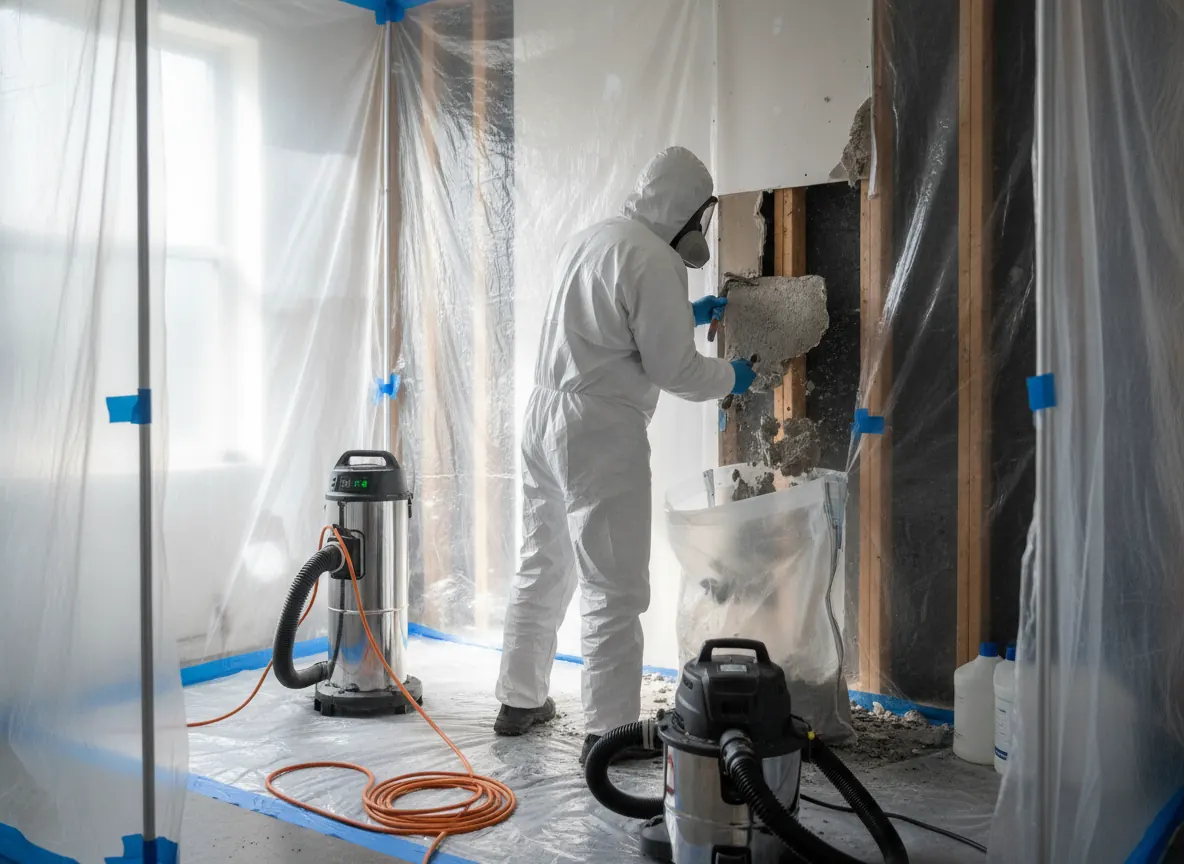
Mold removal, step by step
For anything 25 contiguous square feet or larger, a hired company needs a TDLR license, and Texas splits the work between two separate firms. A licensed assessor writes the protocol; a different licensed remediator does the work; a licensed assessor checks clearance; and you should get a Certificate of Mold Damage Remediation (TDI form MDR-1) within 10 days. Texas Occupations Code §1958.155 says no one may own an interest in both firms on the same project. This is general information, not legal advice. Our mold removal page explains what crews typically do during containment and cleanup, and the cost guide lists typical national price ranges.
Also nearby: Buffalo Springs Lake, Ransom Canyon and Wolfforth.
Slaton mold questions
My Slaton roof was replaced after a hailstorm. Should I still check the attic?
It is worth a look. A new roof stops new leaks, but it does not dry or clean decking, rafters or insulation that got wet before the repair. Look for dark staining, a musty smell or compressed, damp insulation. If you find growth over a large area, a licensed assessor can tell you how far it goes.
Can I clean small mold spots myself in my Slaton home?
Usually, yes. EPA's mold guide says patches under about 10 square feet can be handled yourself in most cases. Separately, Texas law lets homeowners work on their own home without a license at any size. A company you hire needs a TDLR license once the mold reaches 25 contiguous square feet. This is general information, not legal advice.
What does mold removal cost in an older Slaton house?
Cost guides give typical national ranges, such as $1,200 to $3,750 for a typical job and $1,000 to $9,000 for an attic. These are estimates, not quotes. For larger Texas jobs, budget for both a licensed assessor and a separate remediator. The real price comes from licensed pros after an on-site assessment.
Found mold or a hidden leak? Get a clear plan.
Free, no-pressure quotes from licensed pros across Lubbock, Wolfforth, Shallowater, Slaton and the South Plains.