
Mold Inspection & Testing in Lubbock, TX
A musty smell, a stain on the ceiling or a leak you just found? We connect Lubbock-area homeowners with TDLR-licensed mold assessors and remediators for free, no-obligation quotes. Tell us what you’re seeing and we’ll help you get quotes from licensed local pros.
Get a Free Quote Call (727) 300-6656Why mold shows up in a dry city
Lubbock averages about 18.33 inches of precipitation a year under NOAA’s 1991–2020 normals, a fraction of what humid coastal cities get. Dry air does not protect a house where water gets in, though. EPA’s mold guide puts it simply: “The key to mold control is moisture control.” Here, moisture tends to arrive in bursts: a hail-damaged roof, a slab leak, a dripping cooler pan or a summer downpour.
That is why mold in Lubbock homes is often hidden. It grows above a ceiling, inside a wall behind a water heater or under flooring, well before anyone sees it. A mold assessment shows how far it goes and what is feeding it.
Situations where homeowners commonly call a licensed assessor:
- A persistent musty odor with no visible source
- Stains, bubbling paint or soft drywall near a bathroom, kitchen, water heater or HVAC closet
- A recent roof leak, hail storm, plumbing failure or flooded room
- Visible growth that looks larger than a small patch
Why Texas wants an independent, licensed assessor
Texas licenses mold professionals through the Texas Department of Licensing and Regulation (TDLR) under Texas Occupations Code chapter 1958 and the rules in 16 TAC chapter 78. Texas Occupations Code §1958.101 says a person may not engage in mold assessment unless the person holds a mold assessment license. There is no small-job exemption for hired assessment work.
Texas also separates the two halves of a job. Under Texas Occupations Code §1958.155, a license holder may not perform both mold assessment and mold remediation on the same project, and no one may own an interest in both the assessing company and the remediating company on that project. In practice, the assessor who checks your home and writes the plan is a different company from the crew that does the cleanup. That separation is the reason we help you get quotes from each side independently.
Ask any company for its TDLR license number and check it on TDLR’s license search. Our guide on how to verify a TDLR mold license walks through it step by step.
When testing is needed, and when it isn’t
EPA’s mold guide says: “In most cases, if visible mold growth is present, sampling is unnecessary. Since no EPA or other federal limits have been set for mold or mold spores, sampling cannot be used to check a building’s compliance.” TDLR’s consumer sheet adds that “it’s not necessary to identify the species of mold growing in a residence, and the Centers for Disease Control (CDC) does not recommend routine sampling for molds,”.
So when does sampling earn its cost? A licensed assessor may recommend it when there is an odor but no visible growth, when hidden contamination is suspected inside walls or ductwork, or when a buyer, seller or insurer needs documentation. Clearance testing after remediation is a separate step, covered below. If you are weighing a store-bought kit, read DIY mold test kits vs. a licensed Texas mold assessor first.
If anyone in the home has health concerns, talk to a doctor. A mold assessment describes the building, not a person’s health.
What a licensed assessment typically includes
Details vary by company and by home. This is the general shape of the work.
Visual inspection and moisture mapping
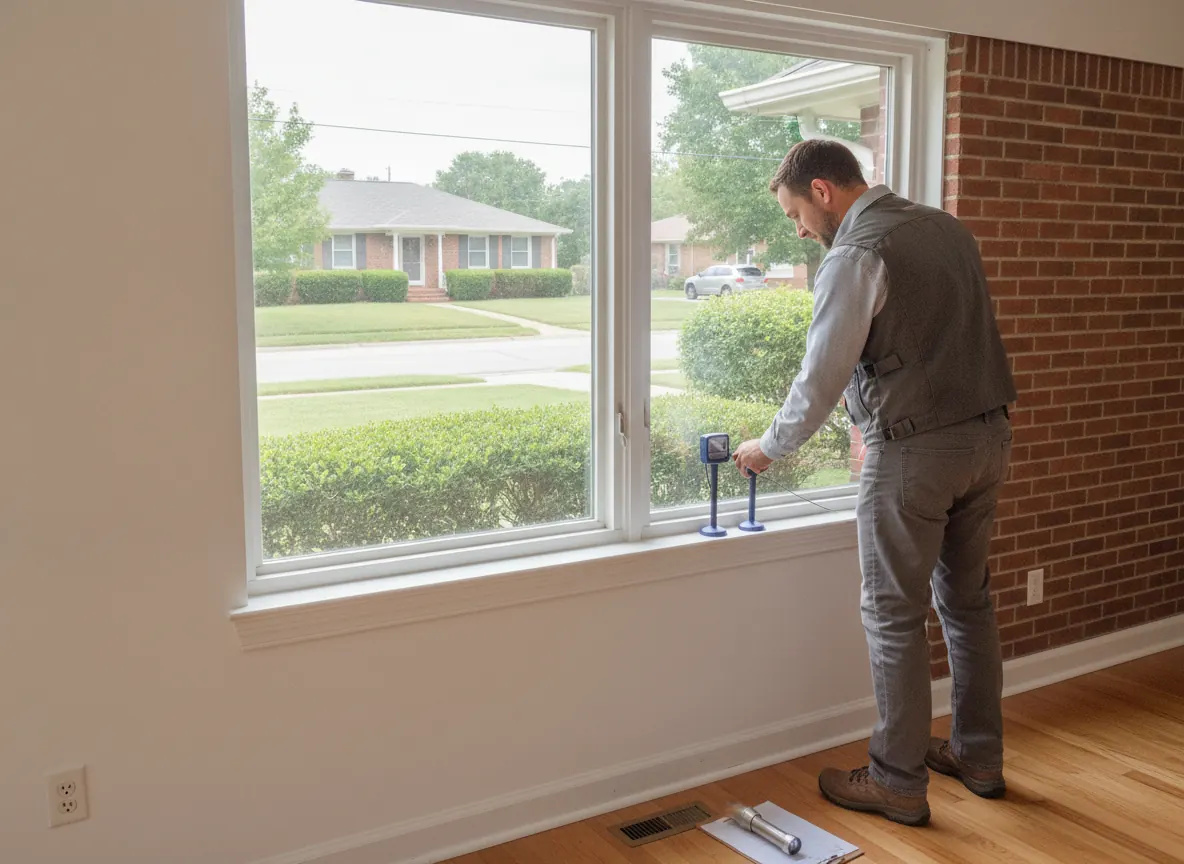
A licensed assessor will typically look for growth and staining and use moisture meters to trace the water.
Sampling, only if it helps
Air or surface samples may be taken when visible growth is absent or documentation is needed. Results come from a lab.
The written remediation protocol
For a project that needs a licensed remediator, the assessor writes a protocol: the areas to be cleaned, the containment, and the standard the work must meet. The remediator bids against that protocol.
Clearance after the work
When the cleanup is finished, a licensed assessor returns to confirm the work met the protocol.
When two remediators quote against the same written protocol, you can compare prices fairly. See our step-by-step process page for how the pieces fit together.
Clearance and the MDR-1 certificate
16 TAC §78.140 says that for a remediation project to achieve clearance, a licensed mold assessment consultant conducts a post-remediation assessment using visual, procedural and analytical methods, and checks that the work area is free from all visible mold and wood rot and that the work followed the protocol and work plan. The consultant then issues a written clearance report.
Texas Occupations Code §1958.154 requires the remediator to give the property owner a certificate of mold remediation within 10 days of finishing. That is the Certificate of Mold Damage Remediation, TDI form MDR-1, and it includes the licensed assessor’s statement that the mold was remediated as outlined in the protocol. The TDLR FAQ notes that a consultant who did not prepare a protocol in advance cannot declare that a project has achieved clearance, so it pays to bring in an assessor before the work starts. Our post on insurance and the MDR-1 certificate covers why it matters.
Note: SB 1255 (2025) changed parts of Texas’s mold law, and TDLR is updating its rules; current rules remain in effect until new ones are adopted. This is general information, not legal advice.
What a mold inspection costs
Typical national ranges from cost guides, 2024–2026, not quotes: a mold inspection usually runs $450–$800 (HomeAdvisor data via Bob Vila: $299–$1,014, average about $656). Air sample testing is about $250–$350, with advanced testing up to $700. Inspection plus remediation for an average home runs about $1,950–$5,800. The real price comes from a licensed assessor after seeing your home. For the full table, see the mold remediation cost guide, or request free quotes and we’ll help you compare.
Frequently asked questions
Do mold inspectors have to be licensed in Texas?
Yes. Texas Occupations Code §1958.101 says a person may not engage in mold assessment without a mold assessment license from TDLR. Unlike remediation, there is no 25 square foot small-job exemption for hired assessment work. Owners working on their own property have separate exemptions. Ask any company for its TDLR license number and check it on TDLR’s license search. This is general information, not legal advice.
Do I need mold testing if I can already see mold?
Often not. EPA’s mold guide says that in most cases, if visible mold growth is present, sampling is unnecessary, and TDLR notes that identifying the species is generally not needed. A licensed assessor may still recommend sampling for hidden growth, odors without a visible source, or documentation for a sale or insurance claim. Clearance after remediation is a separate step.
Can the company that tests my home also remove the mold?
Not on the same project. Texas Occupations Code §1958.155 says a license holder may not perform both mold assessment and mold remediation on the same project, and no one may own an interest in both companies on that project. That is why we help you get quotes from an independent assessor and, separately, from a licensed remediator.
How much does a mold inspection cost in Lubbock?
No Lubbock-specific price survey exists, so we use typical national ranges from cost guides, 2024–2026: about $450–$800 for an inspection (HomeAdvisor data via Bob Vila: $299–$1,014, average about $656) and $250–$350 for air sampling. These are estimates, not quotes. Your actual price comes from a licensed assessor after an on-site visit.
Is a free quote the same as a mold inspection?
No. We help you get free, no-obligation quotes. The inspection itself is done and priced by a TDLR-licensed assessor, who explains what it includes before you agree to anything. We do not inspect, test or evaluate homes. Tell us what you’re seeing and we’ll help you get quotes from licensed local pros in Lubbock and nearby towns.
Found mold or a hidden leak? Get a clear plan.
Free, no-pressure quotes from licensed pros across Lubbock, Wolfforth, Shallowater, Slaton and the South Plains.