
Swamp Cooler & HVAC Mold in Lubbock
Evaporative coolers and air conditioners both move water around your home. When that water sits, leaks or overflows, mold can follow. We connect Lubbock-area homeowners with TDLR-licensed mold assessors and remediators for free, no-obligation quotes.
Get a Free Quote Call (727) 300-6656Evaporative coolers add humidity by design
A swamp cooler cools air by passing it over wet pads. That approach works well in dry air. The U.S. Department of Energy notes that evaporative coolers suit low-humidity areas and should not be used in humid climates because they “add humidity to the air in your home,” and it recommends maintenance about monthly during the cooling season.
The added moisture is the point of the machine, but it also means the house holds more water than it would otherwise. EPA’s mold guide recommends keeping indoor humidity below 60%, ideally between 30% and 50%. Without enough exhaust through open windows or relief vents, humidity from a cooler can build up indoors. A simple hygrometer is an inexpensive way to keep an eye on it.
Water in and around the unit is the bigger concern. Texas’s weatherization program (TDHCA) says evaporative cooler “components have a tendency to deteriorate over time,” with “rusting, water calcification/mineral deposits, pump/motor failures,” and its guidance is to “Inspect pan for signs of water leakage.” A rusted pan or overflowing float can drip onto the roof, into the attic or down the duct, and that is where hidden mold problems often start.
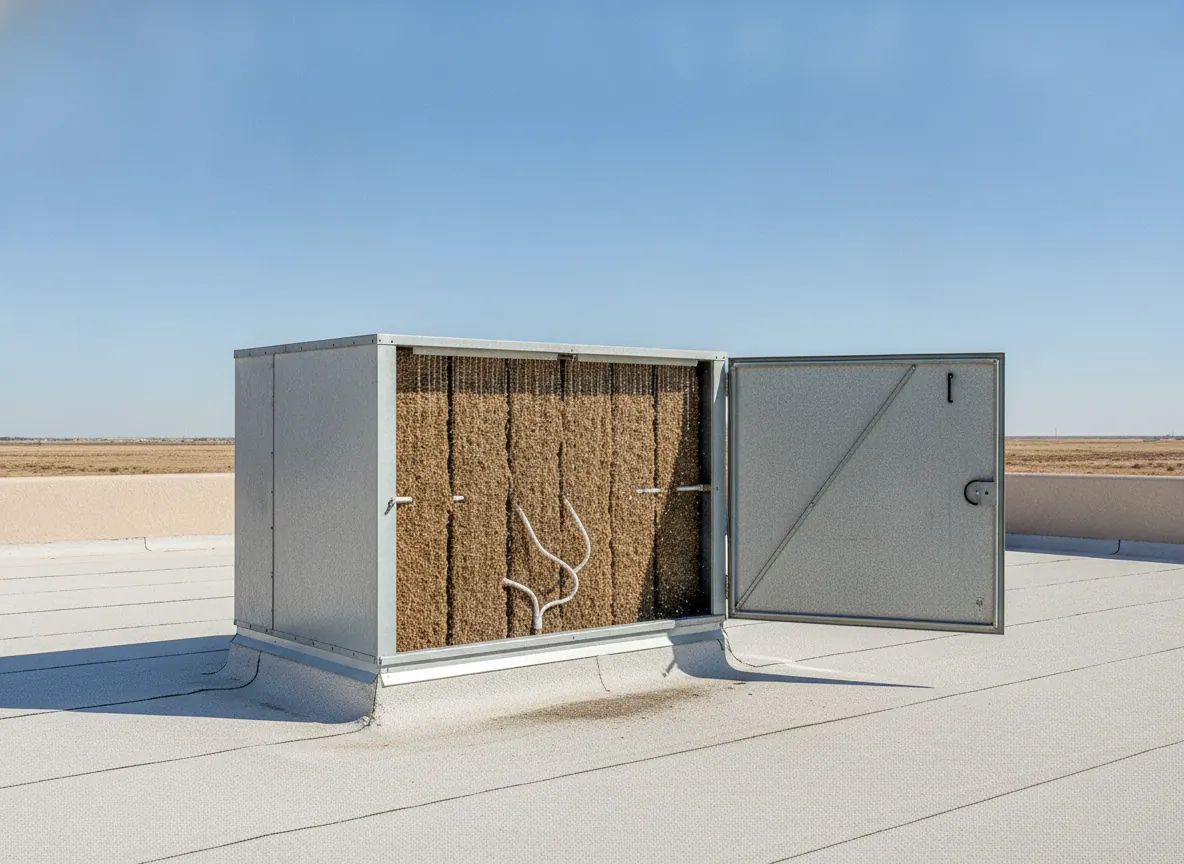
Cooler pads: maintenance, not remediation
Standing water and wet pads need regular cleaning. Pads collect dust and mineral scale, and a unit left wet through the off-season can develop growth and odor. Routine pad replacement, draining and cleaning the reservoir, and checking the float and pump are maintenance tasks. Texas Occupations Code §1958.002(b) excludes routine cleaning, and the repair, cleaning or replacement of HVAC systems and appliances, from mold licensing when the work is not conducted for the purpose of mold assessment or mold remediation.
The picture changes when mold has spread beyond the unit into ducts, attic framing, ceilings or walls. That is mold remediation, and a hired company needs a TDLR remediation license once the affected area reaches 25 contiguous square feet. Our swamp cooler mold guide covers seasonal care, including draining and covering the unit for winter.
- A musty smell when the cooler first starts
- Rust, scale or standing water in the pan
- Water stains on the ceiling under or near the supply vent
- Damp insulation or stained wood around the duct in the attic
Air conditioning: condensate and ducts
Central air pulls moisture out of the air, and that water has to go somewhere. Common sources of AC-related mold include:
- Clogged condensate lines that back up and overflow the drain pan
- Rusted or cracked drain pans under air handlers in attics and closets
- Sweating ducts where cold supply air meets warm, unconditioned attic space
- Leaking secondary pans or float switches that fail to shut the system off
Ducts are a special case. 16 TAC §78.130 sets specific rules for mold remediation in HVAC systems, and the §1958.002(b) carve-out covers HVAC and duct work only when it is not for the purpose of mold remediation. If ductwork has mold, the cleanup falls under the mold rules, which is a good reason to involve a licensed assessor before anyone starts. A licensed assessor will typically check the air handler, coil area, drain pan and accessible duct runs, and may recommend sampling if growth is suspected but not visible.
Texas Occupations Code §1958.155 says the assessor and the remediator on the same project must be separate, and no one may own an interest in both. Ask any company for its TDLR license number and check it on TDLR’s license search.
Note: SB 1255 (2025) changed parts of Texas’s mold law, and TDLR is updating its rules. This is general information, not legal advice.
Typical HVAC mold costs and next steps
Typical national ranges from cost guides, 2024–2026 (not quotes): mold remediation in an HVAC system runs about $3,000–$10,000, a mold inspection about $450–$800, and air sample testing about $250–$350. The real price comes from licensed pros after an on-site assessment. See the cost guide for more ranges.
If anyone in the home has symptoms they think are related to the air system, talk to a doctor. When you are ready, tell us what you’re seeing and we’ll help you get quotes from licensed local pros, or read about mold inspection and testing first.
Frequently asked questions
Do swamp coolers cause mold in the house?
A swamp cooler adds humidity by design; the U.S. Department of Energy says evaporative coolers “add humidity to the air in your home.” Mold problems are more likely when a unit leaks, the pan overflows, pads stay wet or the house has too little exhaust. EPA recommends keeping indoor humidity below 60%, ideally 30–50%. Regular maintenance and good ventilation help.
What causes a musty smell from a swamp cooler?
A musty smell often comes from pads, water or a reservoir that have stayed wet, dirty or stagnant, especially at the start of the season. Draining and cleaning the unit and replacing pads is routine maintenance. If the smell continues, or you see stains near the vent or in the attic, the problem may extend beyond the unit and a licensed assessor can check.
Is cleaning swamp cooler pads regulated as mold remediation?
Routine maintenance generally is not. Texas Occupations Code §1958.002(b) excludes routine cleaning and HVAC or appliance repair and cleaning when not done for the purpose of mold remediation. Mold that has spread into ducts, ceilings or framing is different, and a hired company needs a TDLR license at 25 contiguous square feet. This is general information, not legal advice.
Can mold grow inside AC ducts?
It can, usually where condensation forms, a drain pan overflows or ducts run through hot attics. 16 TAC §78.130 has specific Texas rules for mold remediation in HVAC systems. A licensed assessor can check the air handler, pan and accessible ducts. HVAC mold remediation typically runs $3,000–$10,000 nationally per cost guides; your real price comes from licensed pros.
Can mold in an AC unit cause headaches?
We can’t answer health questions, and a mold assessment describes the building, not anyone’s health. If you or someone at home has headaches or other symptoms, talk to a doctor. For the system itself, a licensed assessor can check the air handler, drain pan and ducts for moisture and growth, and we can help you get free quotes.
Found mold or a hidden leak? Get a clear plan.
Free, no-pressure quotes from licensed pros across Lubbock, Wolfforth, Shallowater, Slaton and the South Plains.