
The short answer: yes, if materials stay wet
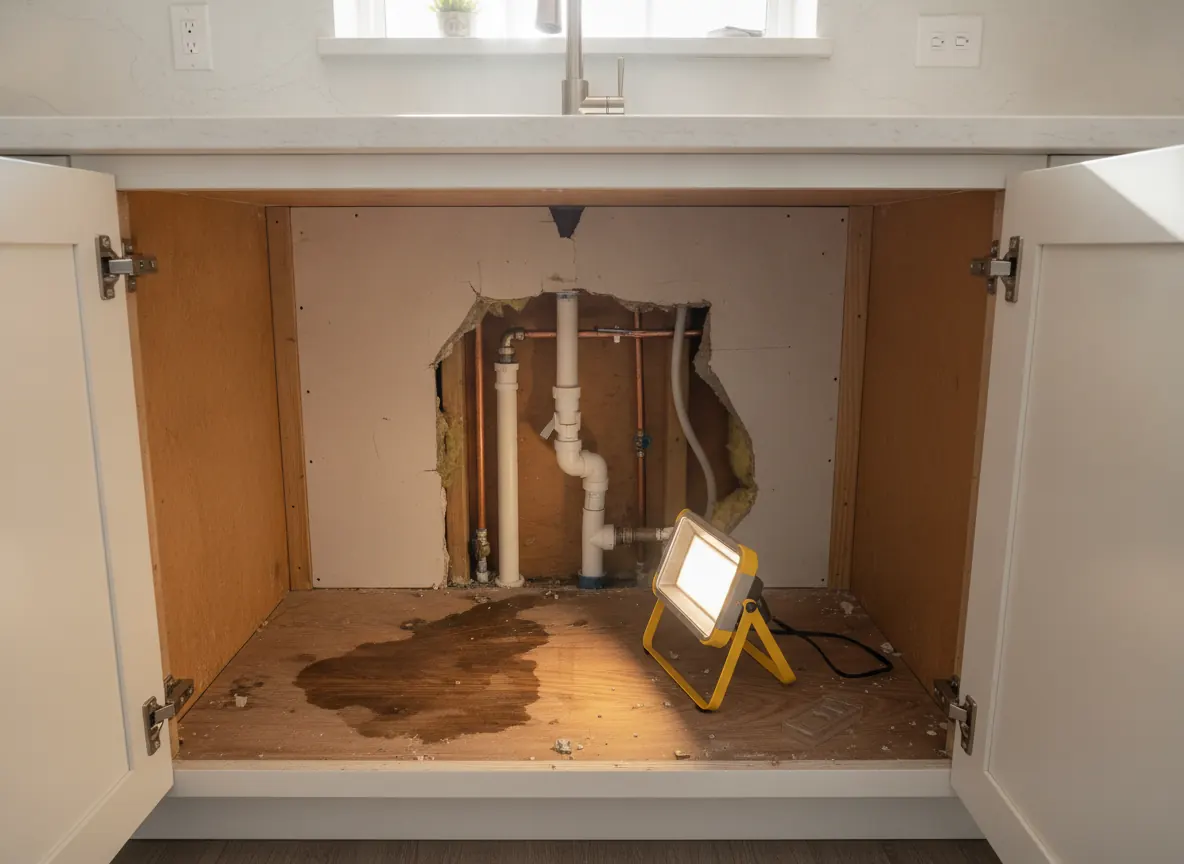
Concrete itself is not food for mold, but almost everything built on top of it is. Carpet and pad, tack strip, wood or laminate flooring, baseboards, drywall and the paper face on drywall all absorb water and can support mold growth when they stay damp. EPA's mold guide states that molds will not grow "without water or moisture," and that "It is important to dry water-damaged areas and items within 24-48 hours to prevent mold growth."
A burst pipe in a kitchen gets noticed in minutes. A slab leak is different. It often seeps slowly, and it can keep wetting the same materials day after day, well past that 24–48 hour window. That is why the question "can a slab leak cause mold" usually comes up only after someone notices a smell or a stain.
Slab foundations are very common across this part of the country. An analysis of Census data by the National Association of Home Builders found that 97.9% of new single-family homes started in 2024 in the West South Central census division (Texas, Oklahoma, Arkansas and Louisiana) were built on slabs. Older homes vary, and some have pier-and-beam crawl spaces instead, which bring their own moisture issues.
Signs of a slab leak and mold under the slab
None of these signs proves a slab leak or mold on its own, but several together are worth a closer look:
- A water bill that climbs without a change in how you use water.
- The sound of running water when every faucet and appliance is off.
- The water meter moving while nothing in the house is using water.
- Warm or damp spots on the floor, which can point to a hot-water line leak.
- Flooring changes: wood or laminate that cups or buckles, tile grout that stays dark, or carpet that feels damp near a wall.
- A musty smell near baseboards, closets, a water heater or the bottom of cabinets.
- Stains, peeling paint or spotty growth along the lower few inches of walls and on baseboards.
The same signs can come from a leak inside a wall or from a water heater. Mold from a water leak in a wall and mold from a water heater leak follow the same rule: the longer the materials stay wet, the more likely growth becomes.
Plumbing repair and mold work are separate jobs
This is the part many homeowners do not expect. Finding and fixing the leak is plumbing. Dealing with any mold the leak caused is mold work. In Texas, they are handled differently.
Texas Occupations Code §1958.002(b) says the mold licensing law does not cover "the diagnosis, repair, cleaning, or replacement of plumbing, heating, ventilation, air conditioning, electrical, or air duct systems or appliances" when that work is "not conducted for the purpose of mold assessment or mold remediation." So a plumber or leak-detection company can locate and repair a slab leak without a mold license.
The mold cleanup afterward is another matter. Texas regulates mold assessment and mold remediation through the Texas Department of Licensing and Regulation (TDLR). Under §1958.102(c), a hired company does not need a license to perform mold remediation where the contamination affects less than 25 contiguous square feet, but it does need one once the job reaches 25 contiguous square feet. A homeowner working on their own home is exempt at any size under §1958.102(e) and 16 TAC §78.30(b).
EPA's separate advice is that if the moldy area is "less than about 10 square feet... in most cases, you can handle the job yourself." That is cleanup guidance, not the Texas licensing threshold, so keep the two numbers apart.
On a licensed project, Texas Occupations Code §1958.155 says the assessor and the remediator must be separate: a license holder "may not perform both mold assessment and mold remediation on the same project." A licensed assessor writes the protocol, a separate licensed remediator does the work, a licensed assessor does clearance, and the owner gets a Certificate of Mold Damage Remediation (TDI form MDR-1) within 10 days. Our article on why your mold inspector can't be your mold remover explains why.
SB 1255 (2025) changed parts of chapter 1958, and TDLR says its current rules remain in effect until new ones are adopted. This is general information, not legal advice.
Can mold grow after a leak is fixed?
Yes. Fixing the pipe stops new water, but it does not dry what is already soaked. Drywall wicks water upward, carpet pad holds it, and the bottom plate of a wall can stay damp for a long time. EPA notes, "If you clean up the mold, but don't fix the water problem, then, most likely, the mold problem will come back." The reverse is also true: fixing the water without drying or removing wet materials can leave growth behind.
After a slab leak repair, it helps to:
Get the materials dried
Pull back wet carpet, remove baseboards if needed, and run fans and a dehumidifier. EPA suggests keeping indoor humidity below 60%, ideally 30–50%.
Photograph everything
Take dated photos of the leak, the repair, and any stains or growth for insurance and estimates.
Watch for a musty smell
An odor that hangs on after things look dry often means something hidden is still wet.
Get quotes if growth is spreading
A licensed assessor can look behind baseboards and inside walls and, if needed, write a protocol for a separate remediator.
Homes with crawl spaces
Not every older home sits on a slab. In homes with pier-and-beam foundations, a supply or drain leak drips into the crawl space instead of soaking into flooring. The water can pool on soil, wet floor joists and subfloor, and raise humidity under the house. The same idea applies: stop the leak, dry the area and keep an eye on wood framing for staining or growth.
What slab leak mold cleanup typically costs
These are typical national ranges from cost guides, 2024–2026, not quotes. Plumbing repair is priced separately by the plumber. The real mold price comes from licensed pros after an on-site assessment.
| Item | Typical range |
|---|---|
| Per square foot of affected area | $10–$30 |
| By size: 50 / 100 / 200 sq ft | $500–$1,250 / $1,000–$2,500 / $2,000–$5,000 |
| Walls | $1,000–$12,000 |
| Mold inspection | $450–$800 (HomeAdvisor data via Bob Vila: $299–$1,014, avg about $656) |
For jobs of 25 contiguous square feet or more, budget for two separate firms, an assessor and a remediator. Our cost guide has the full table.
Insurance and slab leaks
Homeowners policies differ a lot on plumbing leaks, slab access and mold. Some limit or exclude mold, and coverage often depends on the cause of the water and how long it went on. Read your own policy and ask your agent or insurer before work starts. Our Texas insurance and MDR-1 guide covers the paperwork that can matter later.
Get quotes from licensed local pros
We connect Lubbock-area homeowners with TDLR-licensed mold assessors and remediators for free, no-obligation quotes. Tell us what you are seeing, such as a musty smell after a slab leak repair or stains along a baseboard, and we will help you get quotes. Ask any company for its TDLR license number and check it on TDLR's license search. For more detail, see our page on water leak and slab leak mold.
If anyone in your home has health concerns related to mold, talk to a doctor.